Supremacy of God
Supremacy of God
The supremacy of God is a central theme in the Bible, showcasing His absolute authority, power, and sovereignty over all creation. During the reign of Ahab, the supremacy of God was profoundly demonstrated amid religious tensions and idolatry. Elijah's encounter at Mount Carmel further affirmed God’s unrivaled supremacy and highlighted the consequences of turning away from Him.
1. Religious Tensions During Ahab’s Reign
1.1. Background of Ahab’s Reign (1 Kings 16:29-34)
- Ahab’s Rule: Ahab, son of Omri, reigned over Israel for 22 years. He is described as doing more evil in the sight of the Lord than any king before him.
- Jezebel’s Influence:
- Ahab married Jezebel, daughter of the king of Sidon, who brought Baal worship into Israel.
- Jezebel actively promoted idolatry, leading Ahab to erect an altar for Baal and provoke the Lord's anger.
Key Points:
- Idolatry’s Spread: Ahab’s reign marked a period of spiritual decline, with widespread Baal worship.
- Conflict with God’s Law: Idolatry violated the first two commandments, undermining Israel’s covenant with God.
1.2. Religious Persecution and Drought (1 Kings 17:1-7)
- Elijah’s Pronouncement:
- God sent the prophet Elijah to declare a drought as a consequence of Israel’s idolatry (v. 1).
- The drought lasted three years, demonstrating God's control over nature, in contrast to Baal, a supposed storm god.
- Elijah’s Preservation:
- During the drought, God provided for Elijah at the Brook Cherith, where ravens brought him food (vv. 2-6).
- This provision showed God’s care for His servants amid difficult circumstances.
Summary:
The drought served as both judgment against idolatry and a call for repentance, proving the futility of Baal worship.
2. Elijah at Mount Carmel
2.1. The Confrontation with Ahab (1 Kings 18:1-19)
- God’s Command: After three years, God instructed Elijah to confront Ahab and announce the end of the drought.
- Accusation and Challenge:
- Ahab accused Elijah of being the cause of Israel’s troubles.
- Elijah countered by pointing to Ahab’s idolatry as the root cause.
- Elijah challenged Ahab to gather the prophets of Baal and Asherah at Mount Carmel for a contest to determine the true God.
Key Takeaway:
Elijah’s boldness in confronting Ahab highlighted his trust in God’s supremacy.
2.2. The Contest at Mount Carmel (1 Kings 18:17-40)
Preparation for the Contest:
- Two Altars: One for Baal and one for the Lord.
- Conditions: Each side would call on their god, and the one who answered by fire would be the true God.
Baal’s Failure (vv. 26-29):
- The prophets of Baal cried out from morning till evening, cutting themselves and leaping around their altar.
- Despite their efforts, Baal remained silent, proving his powerlessness.
God’s Triumph (vv. 30-39):
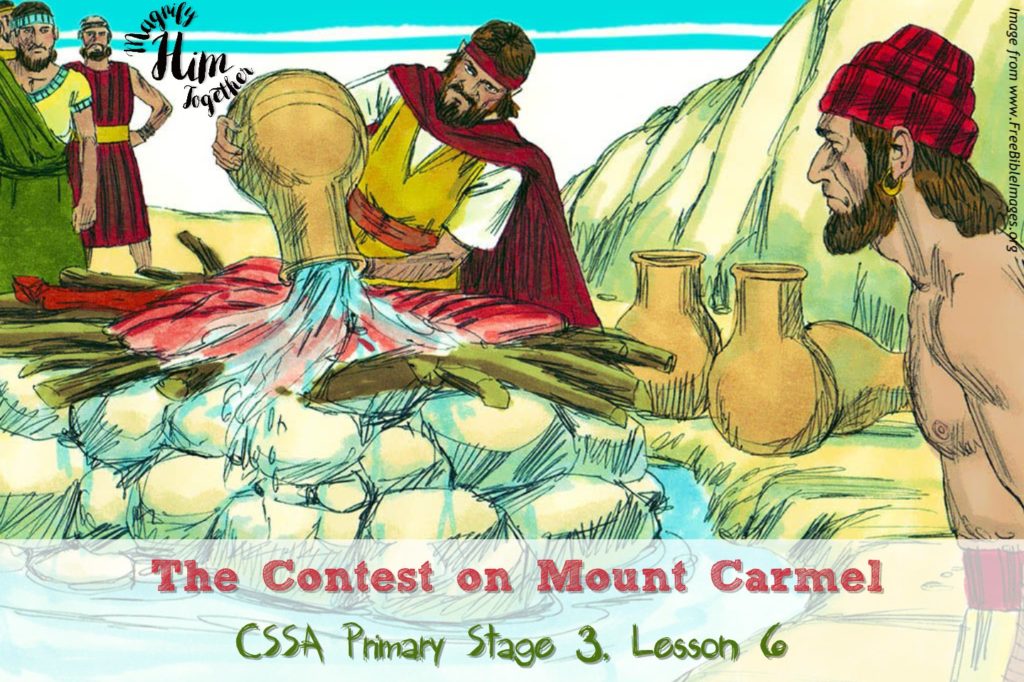
- Elijah’s Prayer: Elijah rebuilt the Lord’s altar, poured water over the sacrifice, and prayed for God to reveal Himself.
- Divine Fire: Fire from heaven consumed the sacrifice, wood, stones, and water, leaving no doubt about God’s supremacy.
- The People’s Response: The people fell on their faces, declaring, “The Lord, He is God!”
Summary:
The Mount Carmel encounter revealed the impotence of false gods and reaffirmed the Lord’s sovereignty.
2.3. End of the Drought (1 Kings 18:41-46)
- Elijah prayed earnestly, and rain returned, signifying restoration after repentance.
- This event demonstrated that blessings come from obedience and acknowledgment of God’s authority.
3. Real-World Applications
-
Faith in God’s Supremacy:
- Just as Elijah trusted God against overwhelming opposition, believers are called to rely on His power in challenging circumstances.
-
Idolatry in Modern Forms:
- Idolatry today may not involve physical idols but can manifest as excessive reliance on wealth, power, or human achievements.
-
God’s Control over Nature:
- The drought and rain at God’s command remind us of His authority over creation, countering misconceptions about self-sufficiency.
-
The Power of Prayer:
- Elijah’s prayer at Mount Carmel demonstrates that prayer aligned with God’s will brings results.
4. Common Misconceptions
- Idolatry Is a Historical Issue: Many assume idolatry ended with ancient Israel, but it persists in modern priorities and distractions.
- God’s Judgment Is Harsh: Some view the drought as excessive punishment, ignoring its purpose as a call to repentance.
5. Key Takeaways and Lessons
- God’s Supremacy Is Absolute: The events during Ahab’s reign demonstrate that no power can rival God’s authority.
- Idolatry Leads to Judgment: Ahab and Israel faced severe consequences for turning away from God.
- True Faith Requires Boldness: Elijah’s confrontation with Ahab and the prophets of Baal underscores the importance of standing firm in faith.
- God Is a Restorer: The return of rain after repentance illustrates His willingness to forgive and bless.
Illustration:
Diagram of Mount Carmel Contest
- Two altars: Baal’s altar (fireless) vs. Elijah’s altar (consumed by divine fire).
- Highlight: God’s fire engulfing the altar signifies His supremacy over false gods.
Conclusion
The supremacy of God is evident in His actions during Ahab’s reign and the Mount Carmel event. These accounts serve as a powerful reminder of the futility of idolatry, the importance of repentance, and the unparalleled authority of the Lord. Believers are called to trust in His power, reject modern forms of idolatry, and boldly uphold their faith in a world of competing allegiances.