Respiratory System
Overview of the Respiratory System
The respiratory system facilitates the exchange of gases (primarily oxygen and carbon dioxide) between an organism and its environment. This system is essential for cellular respiration, which provides energy for vital functions.
9(a) Respiratory Structures: Cutaneous, Gills, and Lungs
1. Cutaneous Respiration
- Definition: Gas exchange occurs directly across the skin.
- Examples: Common in amphibians like frogs and toads, where moist skin allows oxygen diffusion into capillaries beneath the epidermis.
- Characteristics:
- Thin, moist, and well-vascularized skin.
- Relies on diffusion; therefore, effective only for small or aquatic organisms.
- Limitations: Not sufficient in dry environments or for large organisms due to limited surface area.
2. Gills
- Definition: Specialized structures for aquatic respiration.
- Examples: Found in fish, crustaceans, and some amphibians.
- Structure:
- Composed of filaments and lamellae to maximize surface area.
- Highly vascularized for efficient gas exchange.
- Mechanism in Fish (e.g., Tilapia):
- Water enters through the mouth and exits via gill slits.
- Countercurrent exchange maximizes oxygen uptake and CO₂ release.
3. Lungs
- Definition: Internal respiratory structures for air-breathing organisms.
- Examples: Found in mammals, birds, and reptiles.
- Structure in Mammals:
- Composed of alveoli, which are thin-walled, moist, and highly vascularized sacs.
- Surrounded by a network of capillaries to facilitate diffusion of gases.
- Real-world Example: In rats (small mammals), lungs consist of lobes for efficient respiration.
9(b) Mechanisms of Gaseous Exchange
1. Fish (e.g., Tilapia)
- Respiratory Organs: Gills.
- Mechanism:
- Water flows over gill filaments where oxygen diffuses into blood, and CO₂ diffuses out.
- Countercurrent exchange system ensures maximum efficiency.
- Respiratory Movements:
- Mouth opens to draw water in.
- Operculum closes to force water over the gills.
2. Toads
- Respiratory Organs: Skin, lungs, and buccopharyngeal cavity.
- Mechanism:
- Cutaneous respiration in water.
- Buccal pumping facilitates airflow into lungs during terrestrial respiration.
- Respiratory Movements:
- Rhythmic expansion and contraction of the throat.
3. Mammals (e.g., Rat)
- Respiratory Organs: Lungs with alveoli.
- Mechanism:
- Inhalation: Diaphragm contracts, increasing thoracic cavity volume and drawing in air.
- Exhalation: Diaphragm relaxes, expelling air.
- Respiratory Movements:
- Rib cage expansion and diaphragm motion.
4. Plants
- Respiratory Organs: Stomata in leaves, lenticels in stems, and root hairs.
- Mechanism of Stomatal Opening and Closing:
- Opening: Guard cells take in water via osmosis, becoming turgid due to potassium ion accumulation.
- Closing: Guard cells lose water and become flaccid.
Characteristics of Respiratory Surfaces
- Thin Walls: Minimize diffusion distance.
- Moist Surface: Aids in gas solubility.
- Large Surface Area: Maximizes gas exchange (e.g., alveoli, gill filaments).
- Rich Blood Supply: Enhances oxygen delivery and CO₂ removal.
Respiratory Organs in Insects
- Structure: Tracheal system consisting of spiracles, tracheae, and tracheoles.
- Mechanism:
- Air enters through spiracles and travels through tracheae to tissues.
- Diffusion occurs directly at the cellular level, eliminating the need for a circulatory system for gas transport.
Observations and Drawings
1. Bony Fish (e.g., Tilapia)
- Gill structure includes filaments and lamellae.
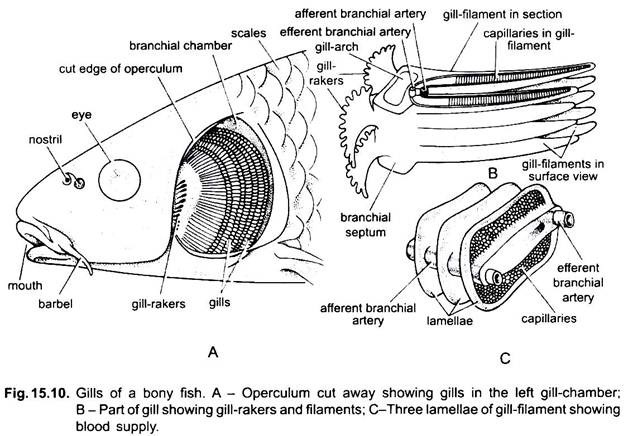
1. External Features:
- The bony fish has opercula (bony flaps) covering the gills on either side of its head.
- Water enters through the mouth and exits via the opercular openings, passing over the gills for gas exchange.
2. Gill Structure:
- Gill Arches: A bony or cartilaginous framework supporting the gills.
- Gill Filaments: Long, thin, and highly vascularized structures extending from the arches, increasing the surface area for gas exchange.
- Lamellae: Thin plate-like structures on the filaments where gas exchange occurs.
- Rich in capillaries to facilitate diffusion of oxygen into the blood and carbon dioxide out of the blood.
- Countercurrent Flow: Blood flows in the opposite direction to water movement, maximizing oxygen uptake efficiency.
3. Respiratory Mechanism:
- Inhalation:
- The mouth opens, and the opercula close, creating a vacuum that draws water into the buccal cavity.
- Exhalation:
- The mouth closes, and the opercula open, forcing water over the gills and out of the opercular openings.
4. Adaptations for Aquatic Respiration:
- Large surface area of gill filaments and lamellae to increase oxygen absorption.
- Thin epithelial layer over the gills for faster diffusion.
- Constant flow of water ensures a fresh supply of oxygen and efficient removal of carbon dioxide.
5. Key Observational Notes During Dissection:
- Gills are bright red due to the high concentration of capillaries filled with oxygenated blood.
- Opercula are rigid yet flexible enough to facilitate water movement.
- The buccal and opercular movements are synchronized for efficient ventilation.
This observation highlights how bony fish like Tilapia are specifically adapted to aquatic environments for efficient respiration.
2. Small Mammal (e.g., Rat)
- Lungs consist of lobes and alveoli.

1. External Features:
- Nostrils (External Nares): Openings on the snout through which air enters the respiratory system.
- Mouth: Alternate route for air entry, though less commonly used in normal breathing.
2. Internal Structures:
- Trachea: A cartilaginous tube that carries air to the lungs. It has distinct rings of cartilage to prevent collapse during breathing.
- Lungs: Paired, spongy organs located in the thoracic cavity.
- Composed of multiple lobes (e.g., right lung has more lobes than the left).
- Richly vascularized with numerous alveoli for gas exchange.
- Diaphragm: A dome-shaped muscular structure beneath the lungs, essential for ventilation.
3. Observations During Dissection:
- Lung Structure:
- Pinkish in color, indicating healthy tissues.
- Spongy texture due to the numerous alveoli.
- Trachea:
- Clearly visible cartilage rings along its length.
- Diaphragm:
- Found separating the thoracic cavity (containing lungs and heart) from the abdominal cavity.
- Moves during respiration to create pressure changes in the thoracic cavity.
4. Respiratory Mechanism:
- Inhalation:
- The diaphragm contracts (flattens), increasing the volume of the thoracic cavity and drawing air into the lungs.
- The rib cage expands as the intercostal muscles contract.
- Exhalation:
- The diaphragm relaxes, reducing thoracic cavity volume and expelling air from the lungs.
- The rib cage contracts as the intercostal muscles relax.
5. Key Features of Alveoli:
- Microscopic, sac-like structures where gas exchange occurs.
- Thin walls (one-cell thick) allow rapid diffusion of oxygen into capillaries and carbon dioxide out of capillaries.
- Large surface area ensures efficient gas exchange.
6. Adaptations for Terrestrial Respiration:
- Presence of a diaphragm allows efficient air movement.
- High surface area of alveoli supports the higher oxygen demands of active mammals.
- Well-developed circulatory system ensures oxygen is quickly transported to tissues.
Summary:
The respiratory system in a small mammal like a rat is highly efficient and adapted to terrestrial environments, ensuring adequate oxygen supply for metabolic activities and thermoregulation. Observing the lungs, diaphragm, and associated structures during dissection provides a clear understanding of mammalian respiration.
Common Misconceptions
- Respiratory systems only involve lungs: Other organs like gills, skin, and stomata are equally vital in various organisms.
- Plants do not respire: Plants respire 24/7, releasing oxygen during the day and carbon dioxide at night.
Real-world Applications
- Medical: Understanding lung mechanics aids in treating respiratory disorders (e.g., asthma, emphysema).
- Environmental: Aquatic ecosystems depend on understanding gill respiration to assess water quality.
- Agriculture: Stomatal function influences crop yield and water efficiency.
Key Formulas and Definitions
-
Fick’s Law of Diffusion:
Rate of Diffusion∝Surface Area×Concentration GradientThickness of Membrane\text{Rate of Diffusion} \propto \frac{\text{Surface Area} \times \text{Concentration Gradient}}{\text{Thickness of Membrane}}Rate of Diffusion∝Thickness of MembraneSurface Area×Concentration Gradient -
Partial Pressure: Drives gas diffusion; gases move from higher to lower partial pressures.
This structured explanation should help in understanding and comparing the respiratory systems across diverse organisms.