Conservation of Natural Resources: Resources to be conserved: soil, water, wildlife, forest and minerals.
Conservation of Natural Resources
Natural resources such as soil, water, wildlife, forests, and minerals are the backbone of ecological balance and human survival. This note explores the meaning, need, and strategies for conserving these resources, addressing the challenges posed by economic development, social pressures, overgrazing, and poaching.
1. Understanding Conservation of Natural Resources
Definition
Conservation refers to the sustainable use and management of natural resources to prevent their depletion and ensure availability for future generations.
Need for Conservation
- Sustainability: Ensures resources remain available for future generations.
- Biodiversity Preservation: Maintains ecological balance and prevents extinction of species.
- Economic Stability: Conserving resources like soil and water sustains agriculture and industries.
- Mitigating Climate Change: Prevents environmental degradation and supports natural processes.
2. Key Resources to Conserve
2.1 Soil
Importance
- Foundation for agriculture and food security.
- Filters water and stores carbon.
Conservation Strategies
- Contour Plowing: Reduces soil erosion on slopes.
- Crop Rotation: Improves soil fertility.
- Afforestation: Prevents erosion and maintains soil structure.
Common Misconceptions
- Misconception: Soil is a renewable resource.
- Reality: While soil forms over time, the process is extremely slow, making its loss irreversible in practical terms.
2.2 Water
Importance
- Essential for life, agriculture, industry, and ecosystems.
Conservation Strategies
- Rainwater Harvesting: Captures and stores rainwater for reuse.
- Efficient Irrigation Systems: Techniques like drip irrigation reduce wastage.
- Recycling and Reuse: Treating wastewater for non-potable uses.
Common Misconceptions
- Misconception: Water scarcity only affects arid regions.
- Reality: Mismanagement and pollution can cause scarcity even in water-abundant areas.
2.3 Wildlife
Importance
- Supports ecosystems by maintaining food chains and biodiversity.
Conservation Strategies
- Protected Areas: Establishing national parks and wildlife sanctuaries.
- Anti-Poaching Laws: Stringent measures to curb illegal hunting.
- Community Involvement: Empowering locals to conserve wildlife.
Common Misconceptions
- Misconception: Wildlife conservation only benefits animals.
- Reality: Conserving wildlife ensures ecosystem stability, indirectly supporting human life.
2.4 Forests
Importance
- Carbon sinks that regulate the climate.
- Source of timber, medicines, and livelihoods for indigenous communities.
Conservation Strategies
- Sustainable Logging: Controlled cutting and replanting of trees.
- Forest Reserves: Protected zones to preserve biodiversity.
- Awareness Campaigns: Educating the public about the importance of forests.
Real-World Application
- Mangrove restoration projects protect coastal regions from storms.
2.5 Minerals
Importance
- Fundamental to construction, technology, and industrial growth.
Conservation Strategies
- Recycling: Reduces the demand for mining.
- Efficient Use: Advanced techniques for resource extraction.
- Alternative Materials: Using renewable substitutes where possible.
Common Misconceptions
- Misconception: Mineral resources are infinite.
- Reality: Minerals are finite and non-renewable.
3. Challenges in Conservation
3.1 Economic Development
- Conflict: Balancing development with conservation.
- Example: Mining projects often lead to deforestation and habitat destruction.
3.2 Social Development
- Issue: Expanding populations require more land, water, and resources.
- Solution: Integrating conservation into urban planning.
3.3 Overgrazing
- Impact: Depletes vegetation, leading to soil erosion and desertification.
- Solution: Implementing rotational grazing systems.
3.4 Poaching
- Impact: Threatens endangered species and disrupts ecosystems.
- Solution: Strengthening anti-poaching laws and monitoring wildlife.
4. Real-World Applications
- Soil Conservation: The Loess Plateau in China, once degraded, was restored using terracing and vegetation growth.
- Water Conservation: Israel's advanced water recycling and drip irrigation systems.
- Wildlife Conservation: Project Tiger in India successfully increased tiger populations.
- Forest Conservation: Costa Rica's policy of payment for ecosystem services incentivizes reforestation.
- Mineral Recycling: Lithium-ion battery recycling initiatives reduce mining impacts.
5. Key Formulas and Definitions
-
Soil Erosion Rate (SER):
���=(�������� (����/����))/(���� (��2))SER=(SoilLoss(tons/year))/(Area(km2))Lower SER indicates effective soil conservation.
-
Water Footprint:
��=(�������������)/(����������������)WF=(TotalWaterUse)/(ProductionVolume)Indicates water efficiency in production.
6. Conclusion
Conservation of natural resources is essential for sustainable development and maintaining ecological balance. The challenges of overgrazing, poaching, and economic development can be mitigated through innovative solutions, awareness, and community involvement. Focusing on efficient resource use and ecosystem restoration ensures a better future for humanity and the planet.
Illustrations and Diagrams
- Diagram 1: Water cycle with rainwater harvesting methods highlighted.
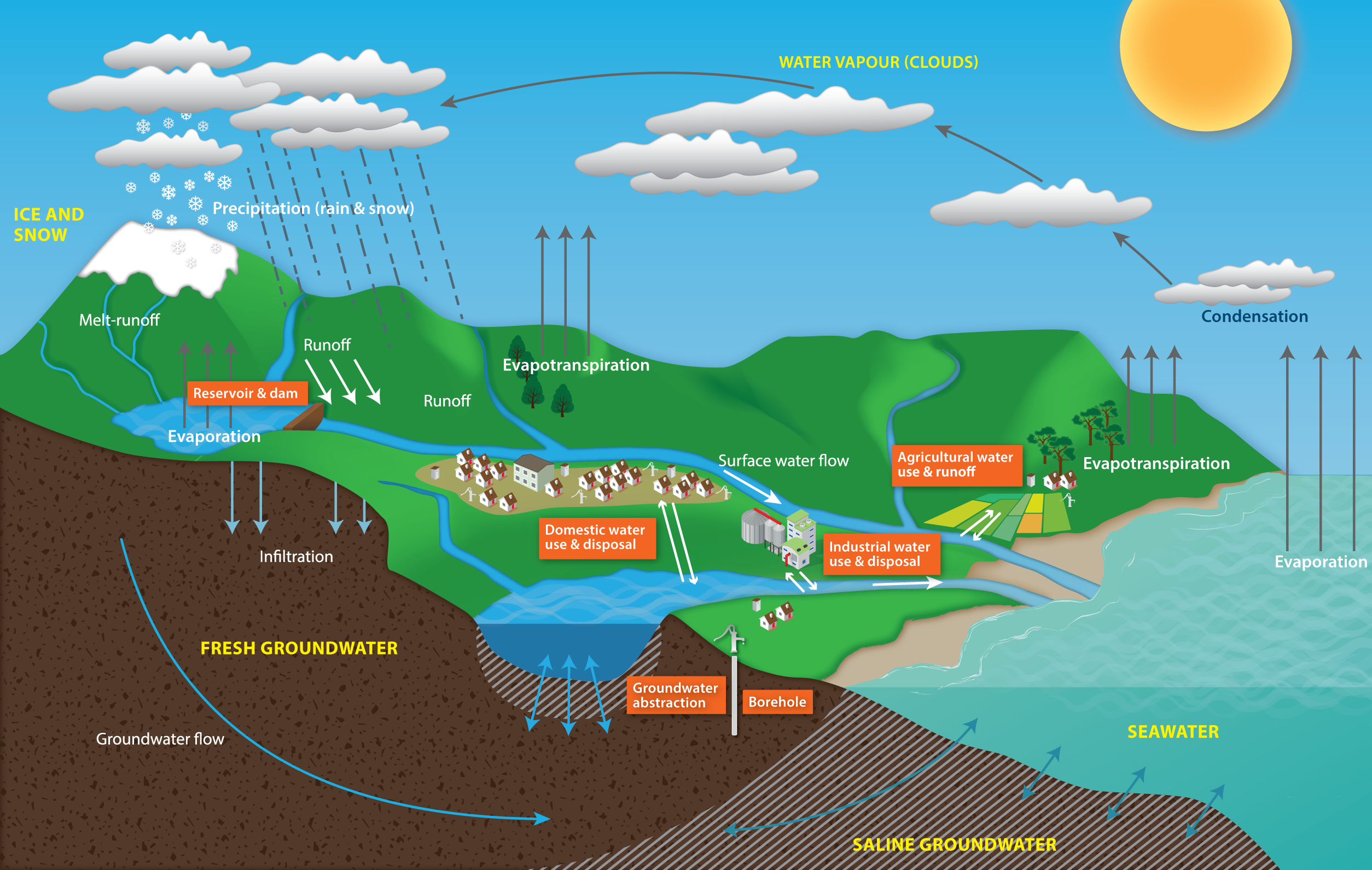
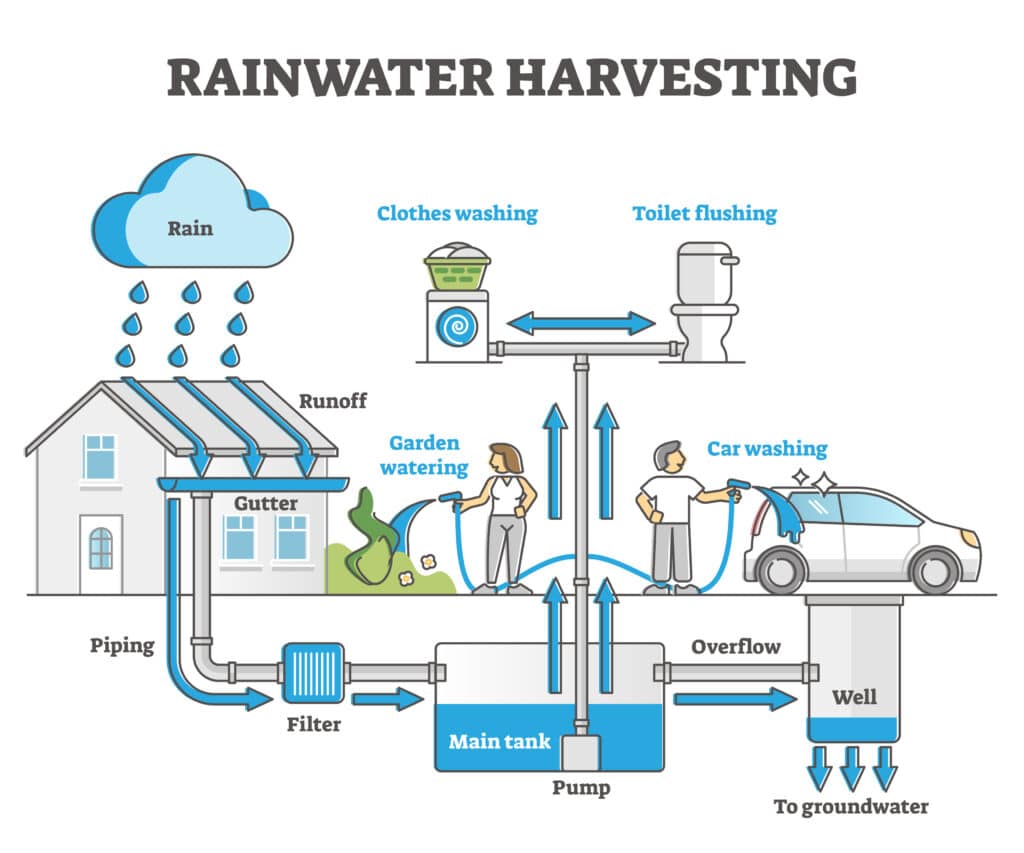
- Diagram 2: Soil erosion effects and contour farming techniques.

- Illustration 3: Protected forest areas and wildlife corridors.
It highlights the relationship between preserved habitats, corridors for animal movement, and nearby human settlements.
Let me know if you'd like diagrams or further elaboration on any section!