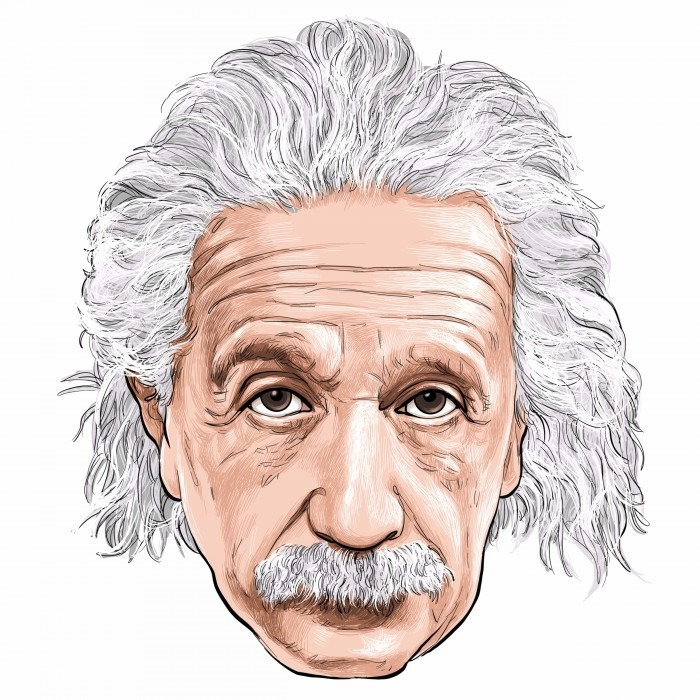
Albert Einstein
A theoretical physicist known for developing the theory of relativity, one of the two pillars of modern physics.
Understand the concepts of relativity, mass-energy equivalence (E=mc²), and the nature of space-time.
Isaac Newton
A mathematician and physicist who formulated the laws of motion and universal gravitation.
Explore Newton's laws of motion, calculus, and the principles of classical mechanics.
Archimedes
An ancient Greek mathematician and engineer known for his work in geometry, hydrostatics, and levers.
Understand the principles of buoyancy, levers, and geometric proofs.

Charles Darwin
Charles Darwin was a 19th-century naturalist best known for his contributions to the theory of evolution by natural selection. His groundbreaking work, On the Origin of Species (1859), provided evidence that species evolve over time due to environmental pressures and competition for survival.
Understand the evidence of evolution and natural selection
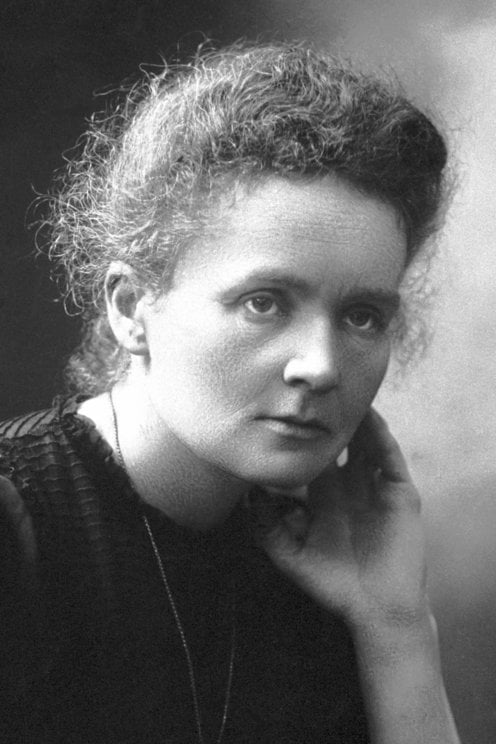
Marie curie
Marie Curie (1867–1934) was a physicist and chemist who made groundbreaking discoveries in radioactivity—a term she coined.
Learn the discovery of Polonium & Radium and radioactivity and its applications
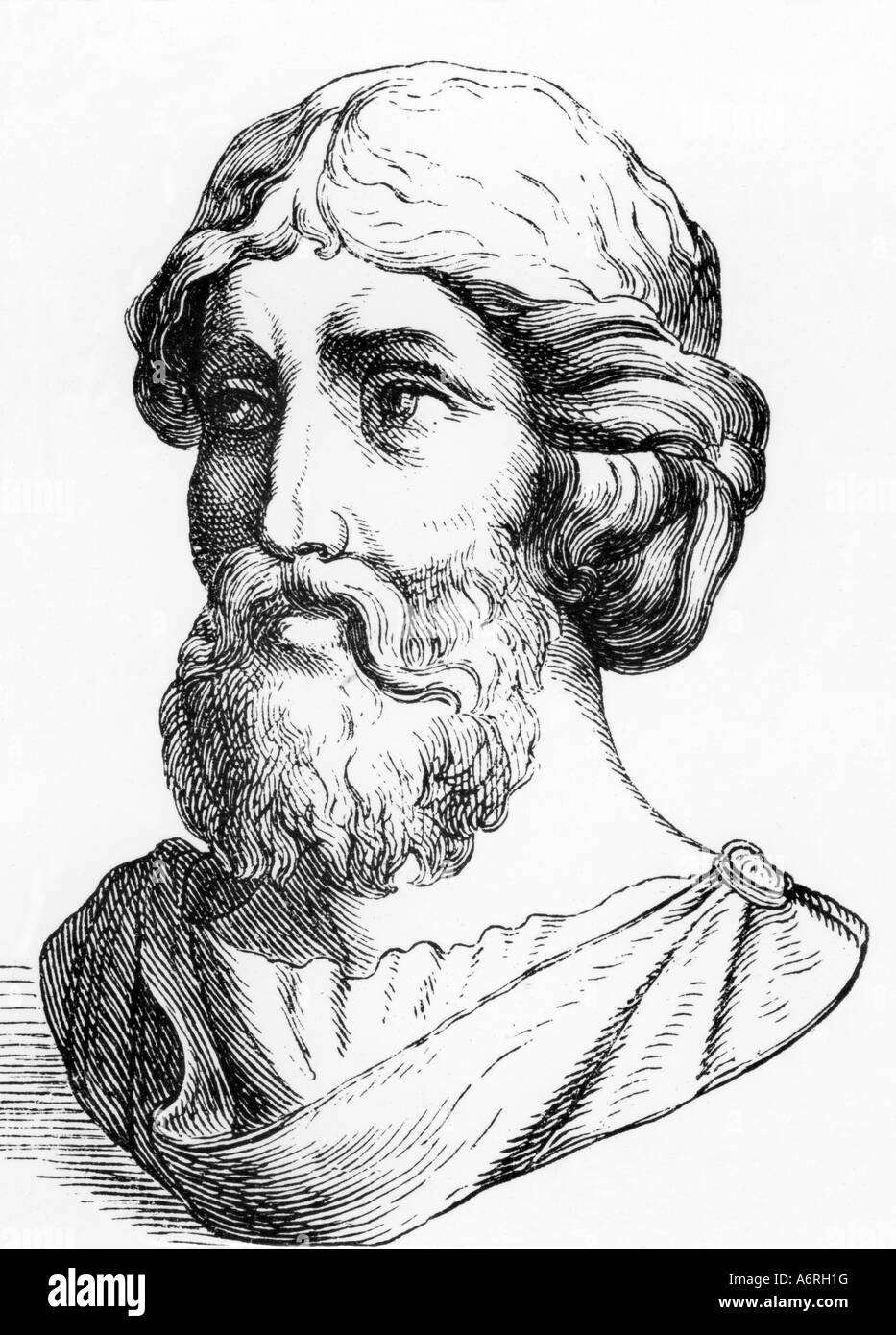
Pythagoras
Pythagoras (c. 570–495 BCE) was an ancient Greek mathematician and philosopher best known for the Pythagorean Theorem, which is fundamental in geometry.
Get to understand the rule of Pythagorean Theorem
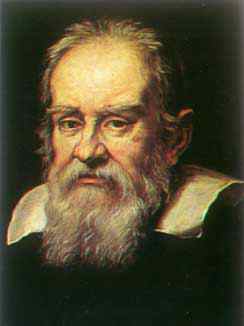
Galileo Galilei
Galileo Galilei (1564–1642) was an Italian astronomer, physicist, and engineer whose work revolutionized our understanding of the universe.
Learn more about his telescopic discoveries and his experiments on physics and motion

Charles Babbage
Charles Babbage (1791–1871) was an English mathematician, engineer, and inventor known for conceptualizing the first mechanical computer, the Analytical Engine
Learn more about the father of computer