Chemistry 2019
minutes!
Question(s):
1
(a) Explain briefly why has a stable electron configuration compared to
(b) Consider the following elements: 1H and 3Li.
(i) State the number of electrons that an atom of each element would have after forming an ionic bond.
(ii) Give a reason for each of your answers stated in (b)(i).
(c) State two factors that should be considered when siting a chemical industry.
(d) State two advantages of using a catalyst instead of high temperatures in chemical reactions.
(e) Turpentine burns in chlorine according to the following equation:
CH + 8Cl 10C + 16HCl
Calculate the mass of turpentine that would completely burn in 21.3 g of chlorine.
[Molar mass of chlorine = 71 gmol; Molar mass of Turpentine = 136 gmol]
(f) What is cracking?
(g) State two factors that may influence the value of electron affinity.
(h) What are carbohydrates?
(i) State two differences between a simple sugar and starch.
(j) Write an equation to show the dissociation of each of the following acids:
(i) HCO;
(ii) CHCOOH.
2
(a) (i) Name three different methods for preparing salts.
(ii) Give one example of a balanced equation for each of the methods named in (a)(i).
(iii) State two uses of sodium trioxocarbonate (IV).
(b) If you were given some impure copper, describe how you would
obtain a specimen of the pure metal by electrolysis.
(c) Given that sodium chloride has a solubility of 36.3 at 30 and 39.0 at
100 and that of silver nitrate is 297.0 at 30 and 952.0 at 100.
(i) Calculate the percentage of each substance in the saturated solution at 100 that is deposited on cooling to 30
(ii) Deduce which of the two salts can be purified more efficiently by crystallization.
3
(a) (i) State the important points put forward in Dalton’s atomic theory.
(ii) How does the theory explain the law of multiple proportion?
(b) (i) Name three commercially useful products that may be obtained by chemical transformation of vegetable oils.
(ii) With the aid of equations, describe the chemical reaction involved in the transformations stated in (b)(i).
(c) Certain properties of Beryllium (Be) and its compounds differ from those of Magnesium (Mg) and its compounds, but rather resembles those of Aluminium and its compounds. Explain briefly why this is so.
(d) Write balanced equation for the reaction between iodine and aqueous sodium trioxothiosulphate(VI).
4
(a) (i) What is meant by hardness of water?
(ii) Describe briefly how you would determine what proportion of hardness in a given sample of water is due to permanent hardness.
(iii) Give two reasons why hardness of water is an undesirable property.
(b) State the:
(i) reagents;
(ii) conditions for the laboratory preparation of trioxonitrate (V) acid.
(iii) How does concentrated trioxonitrate (V) acid reacts with:
(I) sulphur;
(II) aluminium.
(c) Name one amphoteric oxide.
5
(a) (i) Write an equation for the reaction by which sulphur dioxide in solution could be converted to tetraoxosulphate (VI) acid.
(ii) State one test to confirm the conversion of sulphur dioxide to tetraoxosulphate (VI) acid.
(iii) State the reaction of concentrated tetraoxosulphate (VI) acid with:
(I) oxalic acid;
(II) copper.
(iv) What property of concentrated tetraoxosulphate (VI) acid does each of the reactions stated in (a)(iii) illustrate?
(b) (i) Explain briefly why water is referred to as a universal solvent.
(ii) Give one chemical test for water.
(c) (i) What is the major component of synthetic gas?
(ii) Give one reason why synthetic gas is not a major source of air pollution.
(d) Name one product of destructive distillation of coal that is:
(i) solid;
(ii) liquid;
(iii) gas.
(e) (i) Write a balanced chemical equation for the complete combustion of carbon.
(ii) State one:
(I) physical;
(II) chemical property of the products in (e)(i).
6
(a) State the conditions necessary for the cracking of long-chain hydrocarbons to produce more gasoline.
(b) State two reasons why metallic objects are electroplated
(c) (i) Explain briefly why calcium oxide cannot be used to dry hydrogen chloride gas.
(ii) State one drying agent for hydrogen chloride gas.
(d) Concentrated trioxonitrate (V) acid was added to a solution of iron (II) tetraoxosulphate (VI) and the mixture heated. The mixture turned from pale green to yellow with the evolution of a brown gas. Explain briefly these observations.
(e) (i) Write the equation for the reaction between zinc oxide and
- dilute tetraoxosulphate (VI) acid,
- sodium hydroxide solution.
(ii) State which property of zinc oxide is shown by the reaction in (e)(i).
(f) Two isotopes of chlorine are Cl and Cl State one:
- similarity;
- difference between the isotopes.
(g) State the two products formed when chlorine water is exposed to sunlight.
(h) Consider the reaction represented by the following equation:
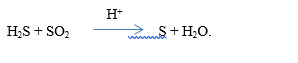
State the:
- species that is undergoing oxidation;
- oxidizing agent.
(i) What is meant by carbon-12 scale?
(j) State two properties of a chemical system in equilibrium.
7
(a) A hydrocarbon having the formula CH was cracked to produce CH and another hydrocarbon P.
(i) Give the molecular formula of P.
(ii) Draw the structures of two isomers of P.
(ii) Give a reason why P could be polymerized.
(b) State the guiding principles which are used to explain the way electrons of the atoms of the elements are arranged in atomic orbitals.
(c)Consider each of the following substances: NaH, H, HS, NHCl.
(i) Describe the nature of the intermolecular forces holding the units or molecules together in the condensed (liquid or solid) state.
(ii) Explain briefly what happens when a sample of each of the substances is added to water.
(iii) Write the chemical equations of any reactions occurring or of any equilibria established.
(d) Element J has the following electron configuration: Is2s2p3s.
(i) How many unpaired electrons can be found in J?
(ii) State whether J would be a good oxidizing or reducing agent.
(iii) Give a reason for the answer in (d)(ii).
8
(a) In the Solvay process, explain briefly with equations the functions of the following substances:
- limestone;
- ammonia.
(b) (i) Write a chemical equation for the fermentation of glucose.
(ii) Explain briefly why a tightly-corked glass bottle filled to the brim with fresh palm-wine shatters on standing for some time.
(c) Consider the following metals: Na, Fe, K and Cu.
(i) Arrange the metals in order of increasing reactivity.
(ii) Which of the metals will react with cold water?
(ii) Which of the metals could form coloured salts?
(d)(i) What is a redox reaction?
(ii) Identify which of the following reaction equations are redox.
(I) 2Na + Cl → 2NaCl
(II) AgCl + 2NH → [Ag(NH)]Cl
(III) CH + H → CH
(IV) HCl + KOH → KCl + HO
(V) 2FeCl + 2KI → 2FeCl + 2KCl + I
(iii) Give a reason for each of the answers in (d)(ii).
(iv) Write balanced equations of the half reactions for any two of the redox reactions in (d)(ii).
9
(a) The following reaction scheme is an illustration of the contact process. Study the scheme and answer the questions that follow.

(i) Name X and Y
(ii) Write a balanced chemical equation for each of the processes I, II, III and IV
(iii) Name the catalyst used in process II
(iv) Using Le Chatelier's principle, explain briefly why increasing the temperature would not favour the reaction in II
(v) State two uses of SO
(b) Consider the following equation: 2H + O 2HO
Calculate the volume of unused oxygen gas when 40 cm of hydrogen gas is sparked with 30cm of oxygen gas
(c) Calcium carbonate of mass 1.0 g was heated until there was no further change.
- Write an equation for the reaction which took place.
- Calculate the mass of the residue.
- Calculate the volume of the gas evolved at s.t.p.
- What would be the volume of the gas measured at 15 and 760 mm Hg? [C= 12.0, O = 16.0, Ca = 40.0, molar volume of a gas at s.t.p. = 22.4 dm ]
10
(a)(i) Draw and label a diagram to illustrate the preparation and collection of dry chlorine gas in the laboratory.
(ii) State two uses of chlorine.
(b) Describe the preparation of hydrogen from water gas.
(i) Name the chief ore of aluminium.
(ii) Why is the ore purified?
(iii) Name the electrode used in the electrolysis.
(iv) Give one reason why cryolite, NaAlF, is added to the electrolyte.
(c) Name three products obtained directly from the destructive distillation of coal.